Introduction
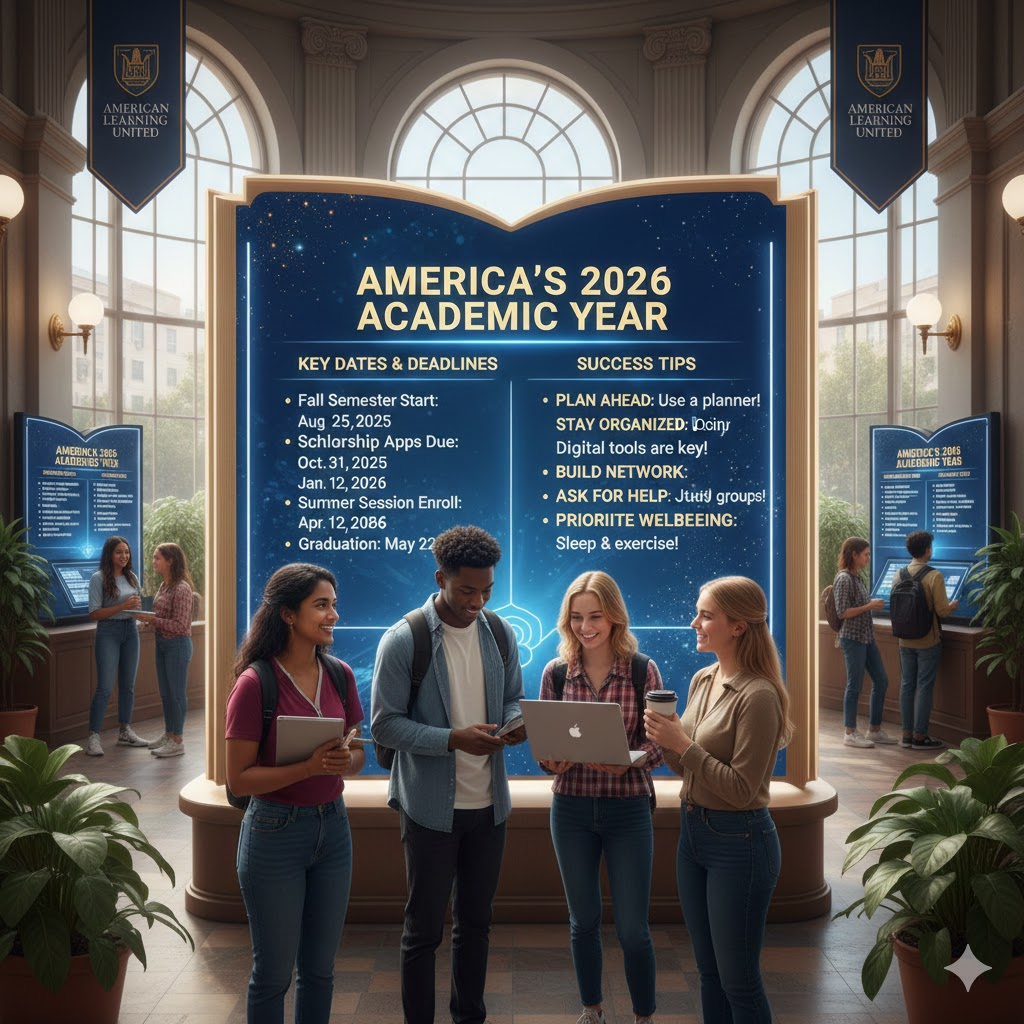
For many students especially first-time college entrants, transfer students, and international learners the American education system can feel like a maze. Unlike countries that operate on a single national academic calendar, the United States uses multiple academic structures. Some institutions follow a semester system, others operate on quarters or trimesters, and start dates can vary significantly depending on the state, institution type, and even program of study. Understanding this complexity is the first and most critical step to academic success.
As the 2026 academic year approaches, students face a landscape shaped by evolving academic policies, increased competition, expanded digital learning, and higher expectations for time management and self-direction. These challenges can feel overwhelming, but they also create opportunity. With the right planning, awareness of key academic dates, and proactive preparation, 2026 can become one of the most productive and successful academic years yet.
This guide is designed to help students make sense of the most important milestones in the U.S. academic calendar for 2026. Whether you are a high school senior preparing for college, a continuing undergraduate, a postgraduate student, or an international learner adjusting to the American system, knowing when semesters begin, when breaks occur, and when academic pressure peaks allows you to plan strategically rather than react under stress.
The goal is not merely to survive the academic year, but to thrive within it. A well-understood academic calendar becomes more than a schedule—it becomes a powerful academic tool.
Understanding the Structure of the 2026 Academic Year
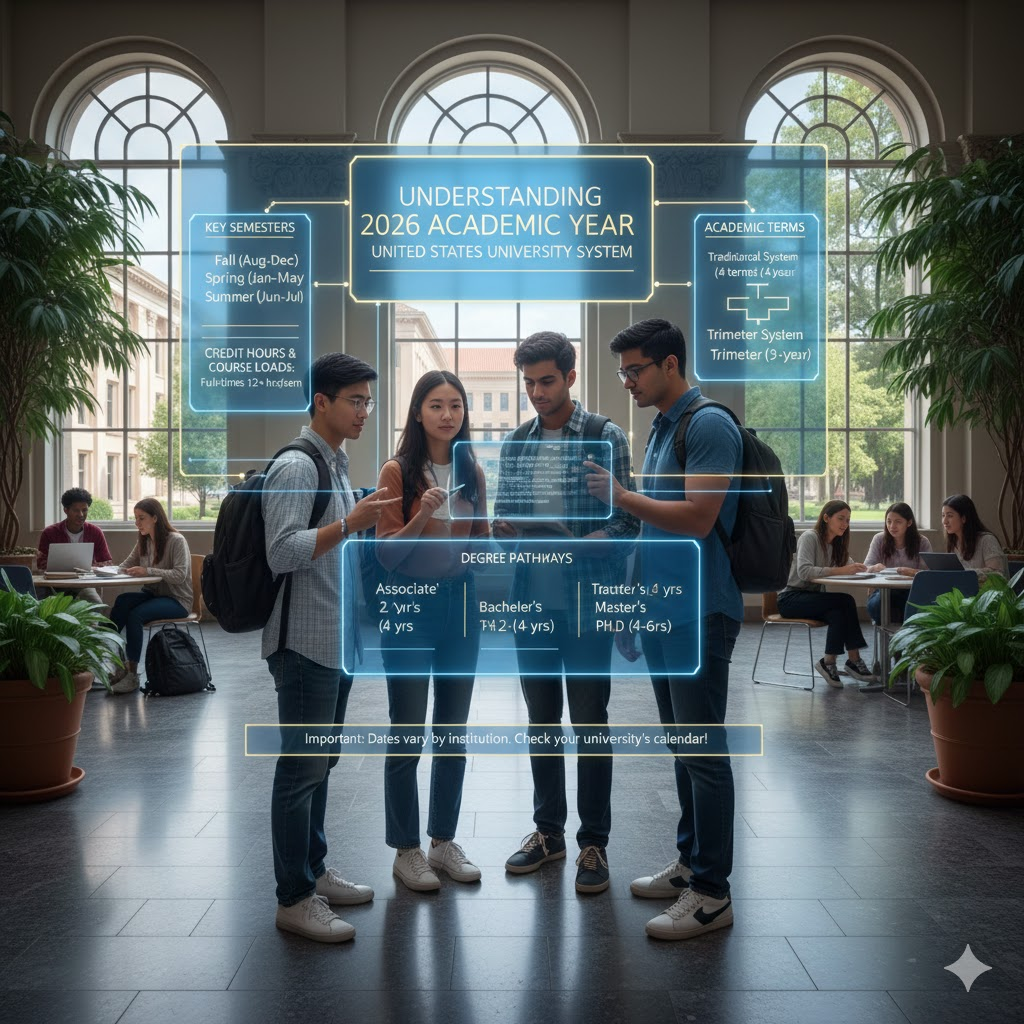
In the United States, the academic year generally runs from late summer through late spring, with optional summer sessions. While exact dates differ by institution, the overall rhythm remains consistent.
K–12 Education
- Start of School Year: August–early September 2025
- End of School Year: May–mid-June 2026
- Major Breaks: Fall break, Thanksgiving break, winter break, spring break, and summer vacation
Colleges and Universities
- Fall Semester: Late August to December 2025
- Spring Semester: January to May 2026
- Summer Sessions: May to August 2026
Most U.S. colleges operate on a semester system, though quarter-based institutions move at a faster academic pace and require even stronger time-management skills.
Key Dates for 2026: The “Big Rocks” of the Academic Calendar
While each institution publishes its own academic calendar, most follow a similar structure. These major periods—often referred to as the “big rocks”—shape the entire academic year.
Winter and Spring Term Start: Early January 2026
For semester-based institutions, the spring term typically begins in the first or second week of January. Students returning from winter break are expected to resume academic intensity almost immediately.
This term often includes:
- Core courses required for degree progression
- Major assessments and midterms
- Early preparation for internships, research programs, and summer opportunities
For quarter-system schools, January marks the beginning of the winter quarter, which moves rapidly and demands strict discipline. Students who prepare in advance by reviewing syllabi, organizing materials, and setting goals are far more likely to succeed.
Spring Break: Mid-March to Early April 2026
Spring break usually falls between mid-March and early April. Although commonly associated with rest or travel, it serves a critical academic purpose.
By this point, students are typically:
- Halfway through the spring term
- Managing overlapping assignments and exams
- Experiencing academic fatigue
Used wisely, spring break becomes a reset point—an opportunity to recharge, catch up on coursework, or prepare for the demanding weeks ahead. This is particularly important because the period immediately after spring break is often one of the most intense phases of the semester.
Spring Finals: Late May 2026
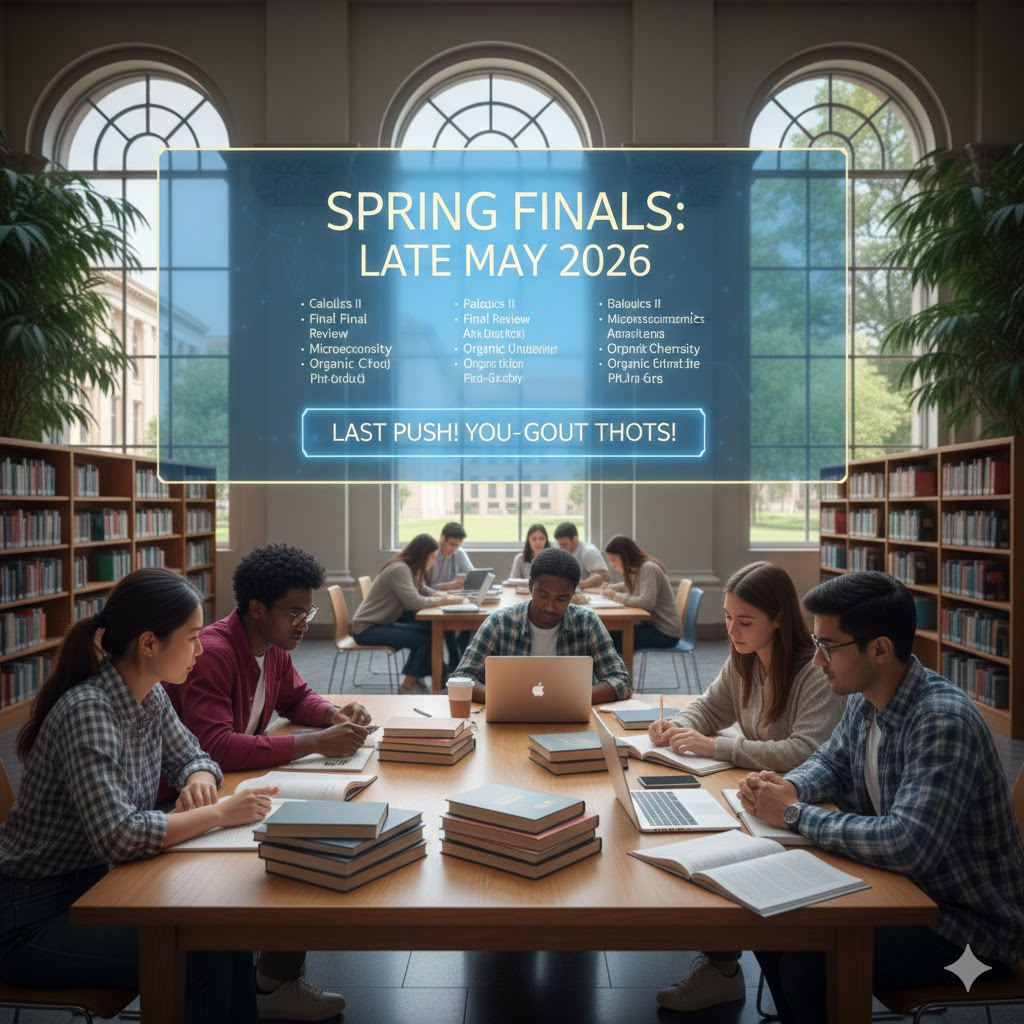
Late May marks one of the most consequential periods of the academic year. Final exams, capstone projects, research papers, and presentations converge during this time.
For graduating students, spring finals determine:
- Degree completion
- Honors eligibility
- Post-graduation opportunities
For continuing students, finals significantly impact cumulative GPA and academic standing. Effective preparation must begin weeks in advance. Students who wait until the final days often experience burnout and diminished performance.
Fall Semester Kickoff: Mid-to-Late August 2026
The fall semester marks the beginning of the 2026–2027 academic cycle and is especially important for:
- First-year college students
- Transfer students
- International students arriving in the U.S.
Orientation programs, foundational courses, and introductory classes dominate this period. Because the fall term is long and academically demanding, early organization such as setting up calendars, understanding grading systems, and identifying support resources can have a lasting impact on performance.
Major Academic Breaks and Federal Holidays
In addition to semester milestones, several national holidays shape the academic year:
- Labor Day (September 7, 2026): Early break in the fall semester
- Thanksgiving Break (November 26, 2026): Occurs near the end of the fall term
- Winter Break (Late December 2026): Separates fall and spring semesters
While these breaks provide essential rest, students should be mindful that assignments and exams often resume immediately afterward.
Critical Deadlines to Watch in 2026

Beyond breaks and semester start dates, responsibility-driven deadlines often have the greatest impact on academic success.
College Application Deadlines: January 1–15, 2026
Regular Decision deadlines typically fall between January 1 and January 15. These applications require:
- Completed application forms
- Personal statements and supplemental essays
- Letters of recommendation
- Academic transcripts and test scores (where applicable)
Because these deadlines coincide with winter break and the start of spring term, early preparation is essential. Students who plan backward from January deadlines produce stronger, more competitive applications.
FAFSA and Financial Aid Deadlines
Financial aid deadlines are often underestimated. While FAFSA opens earlier, state and institutional deadlines vary and may operate on a first-come, first-served basis.
Students should:
- Confirm deadlines for their state and institution
- Gather financial documents early
- Submit applications as soon as possible
Financial stress is one of the most common contributors to academic difficulty. Treating financial aid deadlines with the same urgency as academic deadlines can significantly improve student well-being.
Standardized Testing: SAT and ACT (Spring and Fall 2026)
Despite the rise of test-optional admissions, standardized tests remain relevant for scholarships, honors programs, and competitive admissions.
- Spring 2026: Juniors improving scores
- Fall 2026: Seniors finalizing applications
Because test preparation often overlaps with midterms and finals, careful planning is essential to avoid burnout.
Success Tips for 2026: Working Smarter, Not Harder

Knowing key dates is only half the equation. Success depends on how students manage pressure during peak academic periods.
Tip 1: Beat the Essay Crunch
Mid-semester periods—especially October–November and March–April—often bring multiple writing deadlines at once. This is where many students struggle.
Using professional academic support such as Essayassits allows students to receive expert drafting and editing assistance, ensuring clarity, structure, and academic quality without sacrificing sleep or well-being.
Tip 2: Protect Your GPA Before Finals
By late April, many students realize their GPA is at risk—but options are limited. Proactive academic support earlier in the semester allows students to strengthen work before grades are locked in.
Students who seek guidance early enter finals season with confidence rather than panic.
Tip 3: Choose Quality Over Quantity
Academic success is not about working longer hours; it is about producing stronger work. Submitting fewer, higher-quality assignments consistently yields better outcomes than rushed, error-filled submissions.
Academic support platforms act as partners, helping students elevate research quality, argument strength, and presentation standards across courses.
Visualizing the Academic Year
The 2026 academic year moves in waves—calm beginnings, intense peaks during midterms and finals, and brief recovery periods during breaks. Students who visualize these cycles and plan around them are far better prepared to manage stress and maintain performance.
Conclusion: Make 2026 Your Year
The 2026 academic year will be demanding—but it is also full of opportunity. By understanding key dates, planning ahead, and using academic support strategically, students can transform pressure into progress.
Success is not about avoiding challenges; it is about meeting them with preparation and confidence. Let 2026 be the year you take control of your academic journey
Frequently Asked Questions (FAQ)
Why does the U.S. academic calendar seem complicated?
Because the U.S. does not operate on a single national system. Institutions use semesters, quarters, or trimesters, requiring students to track dates independently.
Are academic dates the same for all institutions?
No. Students should always confirm dates using their institution’s official academic calendar.
When should students begin preparing for 2026 applications?
Several months in advance. Early preparation improves application quality and reduces stress.
Why are FAFSA deadlines so important?
Many aid programs are first-come, first-served. Missing deadlines can reduce or eliminate financial support.
Is academic support considered cheating?
No. Academic support functions like tutoring or writing centers, helping students improve clarity and structure while maintaining academic integrity.
How does EssayAssists help during peak academic pressure periods?
EssayAssists supports students during high-stress periods such as midterms, application season, and final examinations by providing professional academic writing assistance. This support includes drafting guidance, detailed editing, and refinement of research papers and essays. By reducing the writing workload, EssayAssists enables students to meet tight deadlines while maintaining academic quality and personal well-being.
Is using EssayAssists considered academic dishonesty?
No. EssayAssists functions as an academic support and guidance platform, similar to university writing centers and tutoring services. It helps students improve clarity, structure, argumentation, and academic standards in their work while ensuring they remain actively engaged in the learning process and retain full ownership of their submissions.
When is the best time to use academic support services like EssayAssists?
The most effective time to use academic support services such as EssayAssists is early in the semester—before deadlines escalate into emergencies. Proactive use allows students to maintain strong academic performance, reduce last-minute stress, and approach finals season with confidence rather than panic.